Anthropic IPO onchain, Yields on Metric, Pendle Fixed-Term Markets with Ethena, Revenue and Narrative Bias
PLUS: Derive largest fee week, Backpack CFTC approval, and shrinking stablecoin liquidity
Anthropic IPO allocation is tomorrow, and you can gain exposure through Fintch, which we highlight in the first segment of the newsletter.
Pendle launched its fixed-term markets with Ethena last week. This design is similar to short-term notes, so now users can buy PT-USDe below par and redeem 1:1 for USDe at maturity.
While we explore those two, we also highlight the following:
Revenue and Narrative Bias: a small guide on which factors should contribute to the allocation to a certain asset.
Metric Points program is live after its 1 month in public. Pools on Metric are paying yields in the range of 50-100%, which is great from an LP perspective while positioning for a future airdrop.
Derive is growing, had its largest-fee week, and is now open with RWA options, with the first market being $NVDA.
And more.
How to apply for the Anthropic IPO allocation onchain ft. Fintch
Anthropic IPO allocations are being offered on multiple platforms right now, and honestly, everyone wants exposure to the stock.
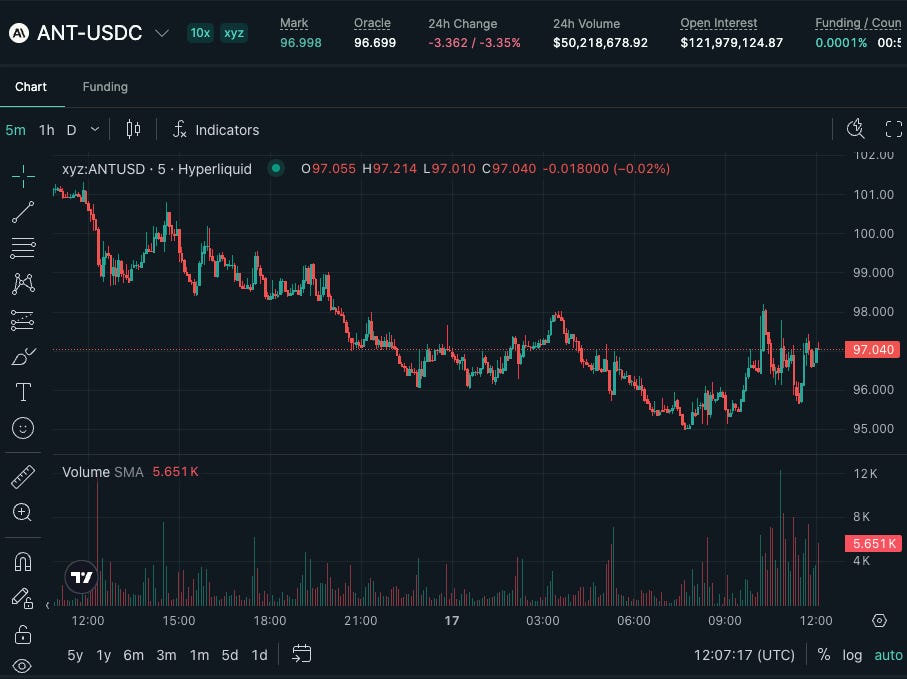
The expected IPO valuation is about $1.4 trillion as it launches on Thursday, with a stock price range of $70-78. Based on annualised revenue of $81 billion, that puts its P/S at 17, making it an investable stock.
We expect the opening valuation to reach $1.6-1.7 trillion (20%+), a push that usually occurs in the first days after the market opens.
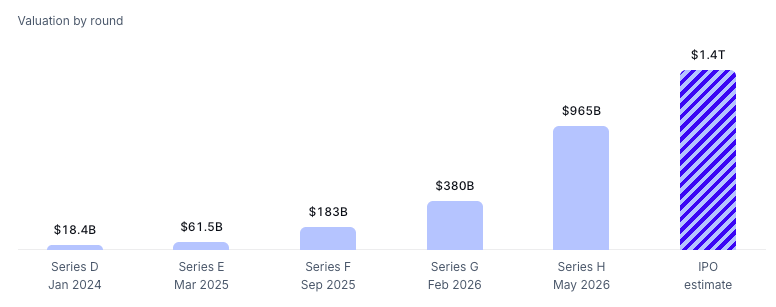
The hard part about this year’s IPOs is getting exposure in the first place. For Anthropic, demand is reportedly about six times bigger than the number of shares on offer, so most people will not get allocated at all.
Also, IPO allocations at the offering price have historically gone mainly to institutions and select brokerage clients. Many retail investors get their first chance to buy once trading begins.
One company offering an easier way to gain exposure is Fintch. The platform was built to let more investors apply for an allocation at the offering price.
Since 2024, Fintch has provided access to private markets without a separate KYC onboarding step and facilitated more than 60 deals. SpaceX was one of its largest, with a reported 90% allocation rate for Fintch investors.
They have now opened their offering through an onchain app, and the Anthropic IPO is the first deal.
Investors can apply from 100 USDT. If they receive an allocation, their entry price is the final IPO price, currently indicated at $70–78 per share. The final price and allocation are determined at pricing, and unallocated funds are refunded.
You can get similar exposure through pre-IPO perps or PreStocks, but they trade at a premium.
With Fintch, investors can apply for an allocation at the offering price and avoid a premium, in exchange for a 5% entry fee, a 20% success fee, and a 93-day post-IPO lock-up.
In practice, users won’t be able to sell until day 93, meaning February 20, 2027.
When you allocate, you receive fANTsub (Fintch Anthropic Subscription) tokens, which you can redeem for USDT after the lockup. Any gain should also be discounted by 20%, as that’s the fee Fintch charges.
Suppose you invest $1000. Finch takes a 5% entry fee ($50), so $950 goes into shares. If those shares are worth $1200 after the lock-up, that’s a $200 gain. Fintch takes 20% of it ($40), and you get $1160.
If you’re looking to participate at the offering price, apply by 15:00 UTC on November 18: https://pro.fintch.one/markets/anthropic
Metric Points Program and First Month in Public
Metric is a new onchain DEX designed to make liquidity more efficient. On the platform, when an LP provides liquidity, they do so in a range like a Uniswap pool, but these ranges tend to move with the market, using prices from external sources like oracles.
This way, your liquidity keeps moving with the market, which is why Metric markets can provide much deeper liquidity through constant repositioning around the mark.
Current yields on Metric pools average 50-100% APR; when allocating, pools with a green dot are safer than yellow.
This is because, on Metric, curators set the pool configuration and fees, so pools that follow best practices and are verified get the green dot.
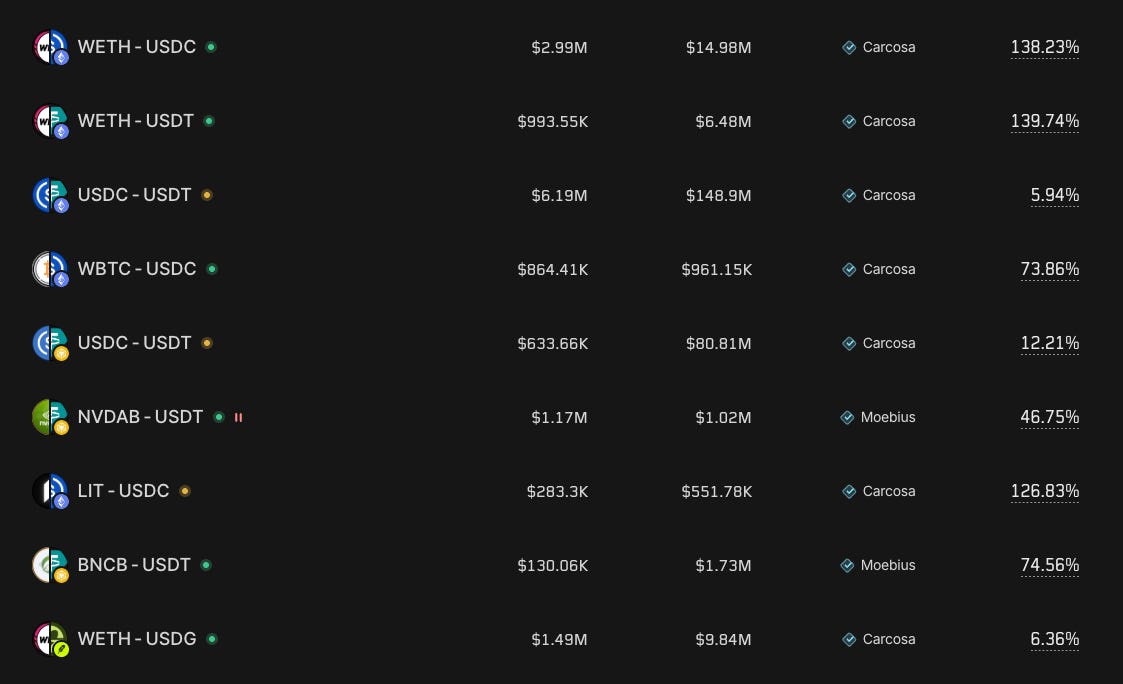
In the first month of public launch, the platform traded over $8 billion in volume, with the TVL increasing at a similar pace, reflecting more sustained capital utilisation on the platform, which is ultimately good for LPs.
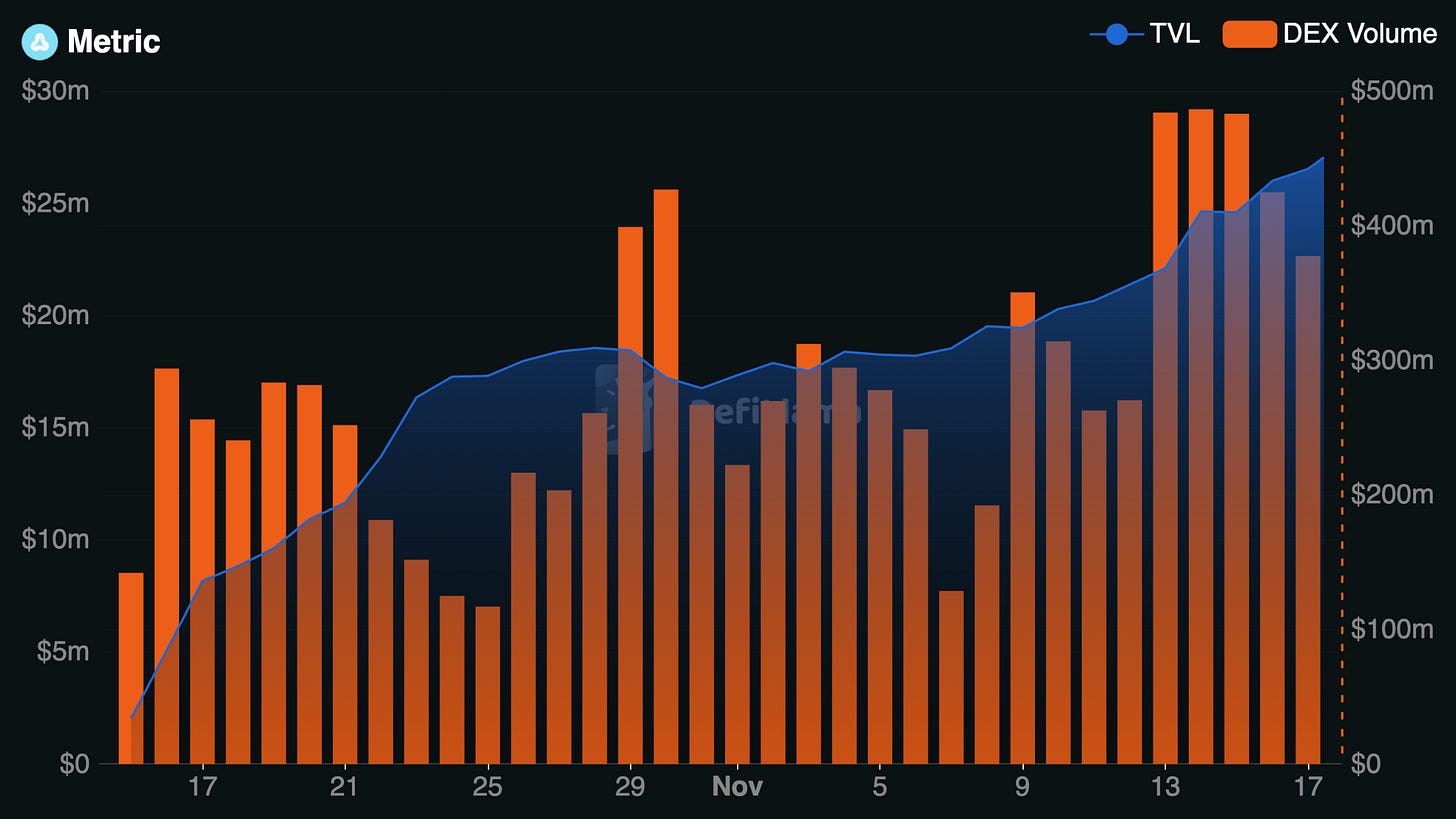
For more detail on the platform, read our article on Metric. Also, the points program is live on the platform: https://app.metric.xyz/r/castle
Pendle Fixed-Term Ethena Markets: An Interview with TN Lee
Pendle recently launched USDe fixed-term markets, a new market design built with Ethena. PT-USDe is bought below par and redeems 1:1 for USDe at maturity, across 3,6, 9-, and 12-month terms.
These markets are unique not only in design but also in incentives: they don’t come with any ENA incentives, and to strengthen the partnership, Pendle now shares 50% of the fees from third-party-operated Ethena pools that would otherwise go to Pendle’s treasury. This essentially makes the market a positive-sum game for both.
To understand these design choices in detail and where Pendle is heading next, we interviewed TN Lee, Pendle’s CEO.
To better define the market, TN added that we should think of this market as “Ethena issuing short-term notes onchain”, working the same way a T-bill or commercial paper does. Buyers can take size at the quoted rate up to each pool’s liquidity depth of $50 million, “much like buying into a primary note issue”.
The fixed-term market also provides a benchmark for crypto risk.
_“At 6%, the 1-year sits somewhere around 170 to 200bps over a 1-year Treasury. That’s roughly the premium the market charges for crypto risk on a name most people treat as blue-chip, and until now there wasn’t a market where you could read that spread directly.”
_Since the notes are PTs, they don’t stop at the issuer and buyer, as they can be posted as collateral on money markets, looped, or sold on Pendle before maturity, a design less seen in fixed-term markets.
On the fee arrangement with Ethena, TN added that the market design was built together with Ethena and fee share reflects that “Ethena gets a new way to raise term funding onchain, and Pendle gets a market driven by real demand for fixed rates”.
Additionally, the structure isn’t limited to USDe, as any protocol with a yield-bearing asset could issue notes the same way on Pendle.
This ties into Pendle’s broader vision: “Pendle wants to be where onchain rates get set and traded”.
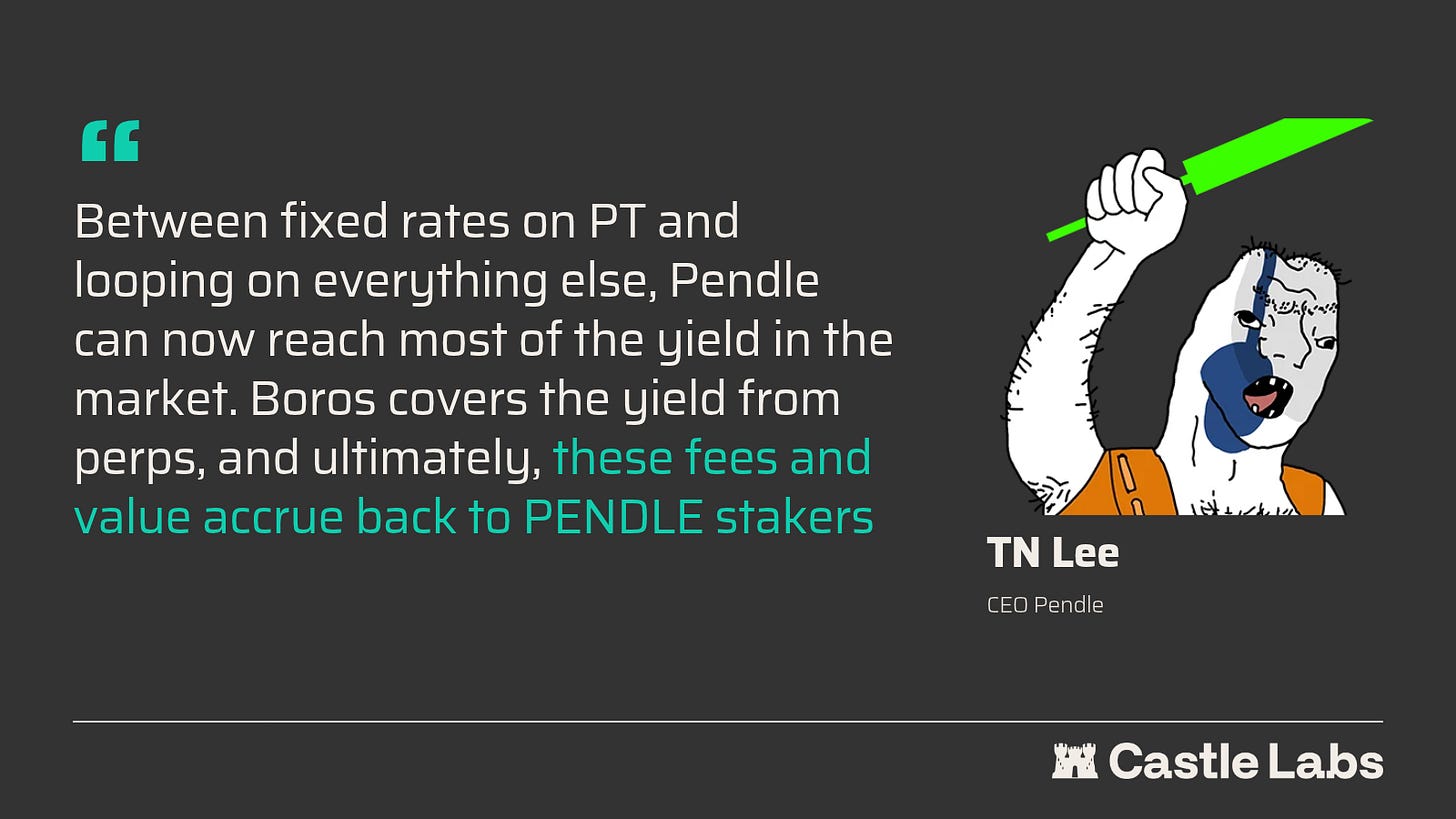
For the next 12 months, Pendle keeps RWAs as the main focus, alongside stablecoins and perps, something which is also reflected in their Q3 growth.
Revenue and Narrative Bias: What should control the allocation?
Yesterday we launched a piece on how to better weigh both Revenue and Narrative from a portfolio perspective, as both are important in a market like crypto.
A good set of investments could combine both, focusing on fundamentals alongside the narrative. If you look at the tokens that have delivered strong YTD returns, the answer becomes clearer.
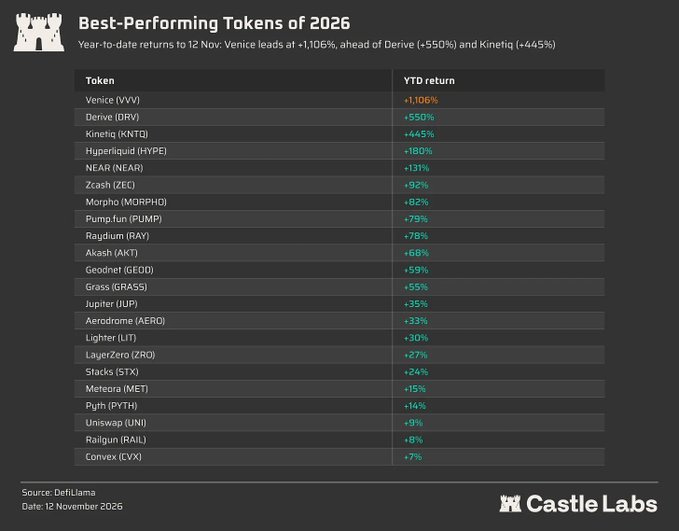
To understand what is better from an investment point of view, a product needs to be assessed through three different lenses to account for both revenue and narrative:
The current fundamentals of the product and how well it is linked to the token. If the token makes consistent cash flow, it is a good token, but it also needs to be paired with emissions to understand the net flow around the token.
The market the product is trying to tap into and how big that market can itself become. Tokenisation is a pretty large market which multiple onchain products are trying to tap into, if a product is directly linked
The narrative the product is built around and has mastered. A narrative-strong product gets demand based on the future growth it could tap into. For Zcash and Pearl, it is Private Money and AI Money, as the former is essentially private Bitcoin and the latter tries to meet the AI compute demand through its token and blockchain design.
Read the complete piece here:
On our Radar
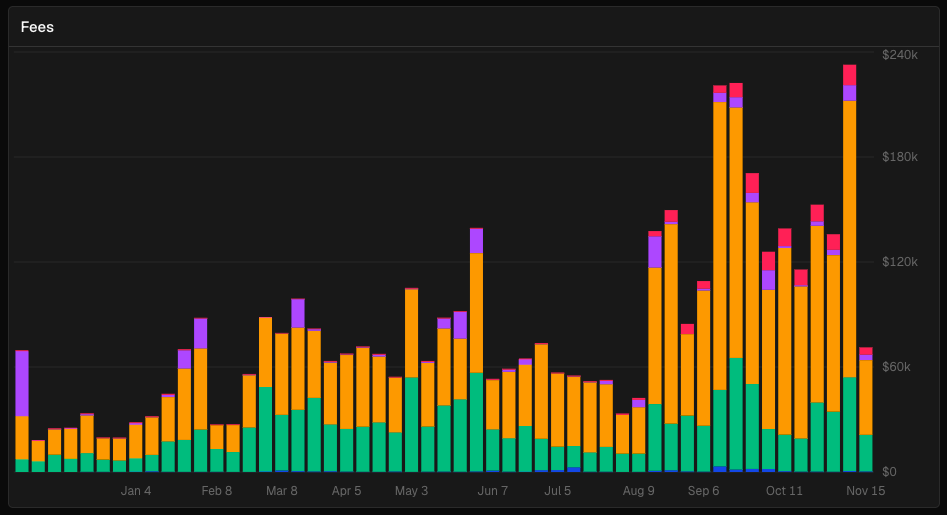
- Last week, Derive made $232k in fees, the largest week in its history. The participant interest in the options market is spiking, and Derive has now expanded to RWA options too, with $NVDA options expanding its TAM beyond crypto markets.
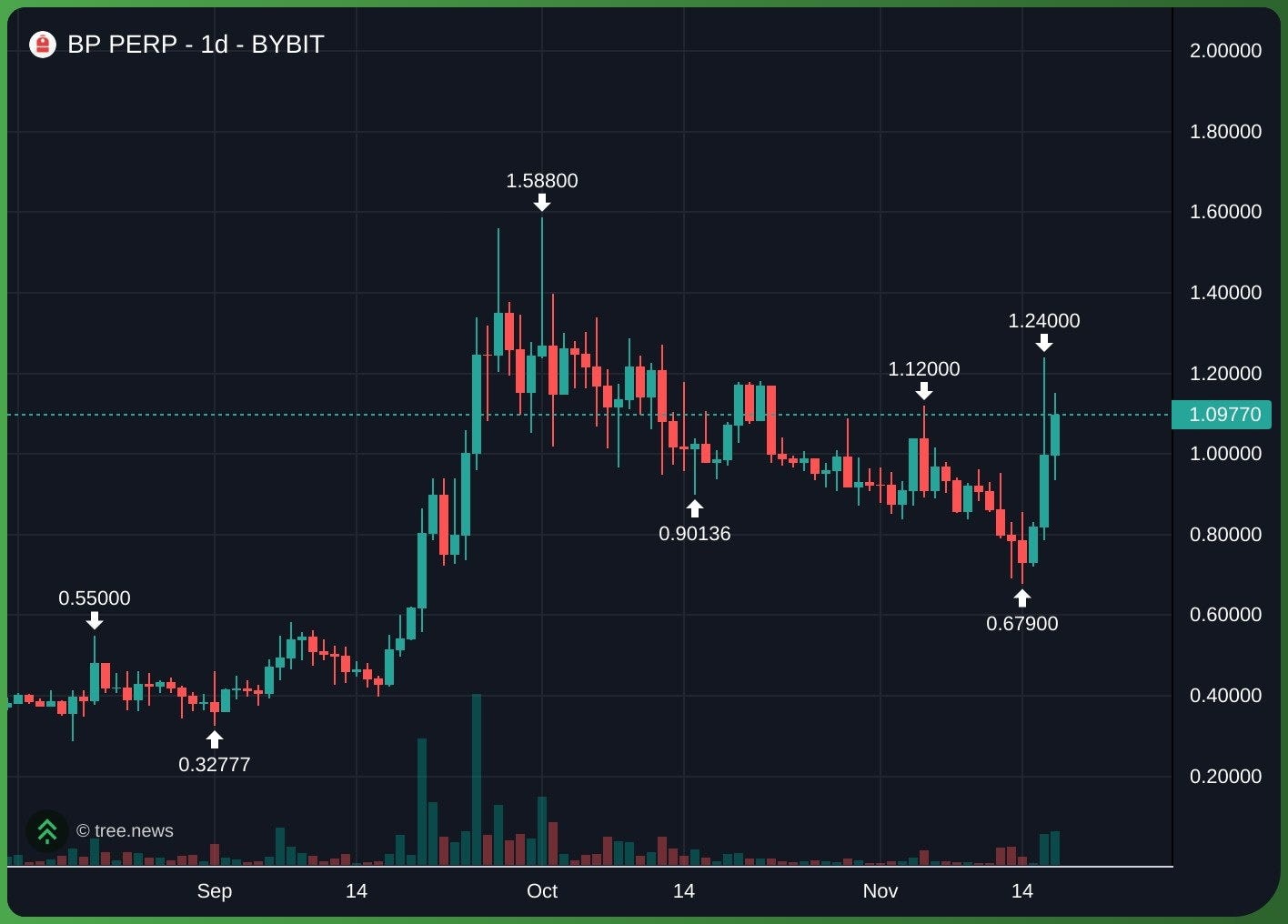
- Backpack got US CFTC approval for its derivatives market, including a Designated Contract Market (DCM). This approval pushed the token, as the platform can now serve one of the deepest, most liquid markets, increasing its TAM in a regulatory-friendly way.
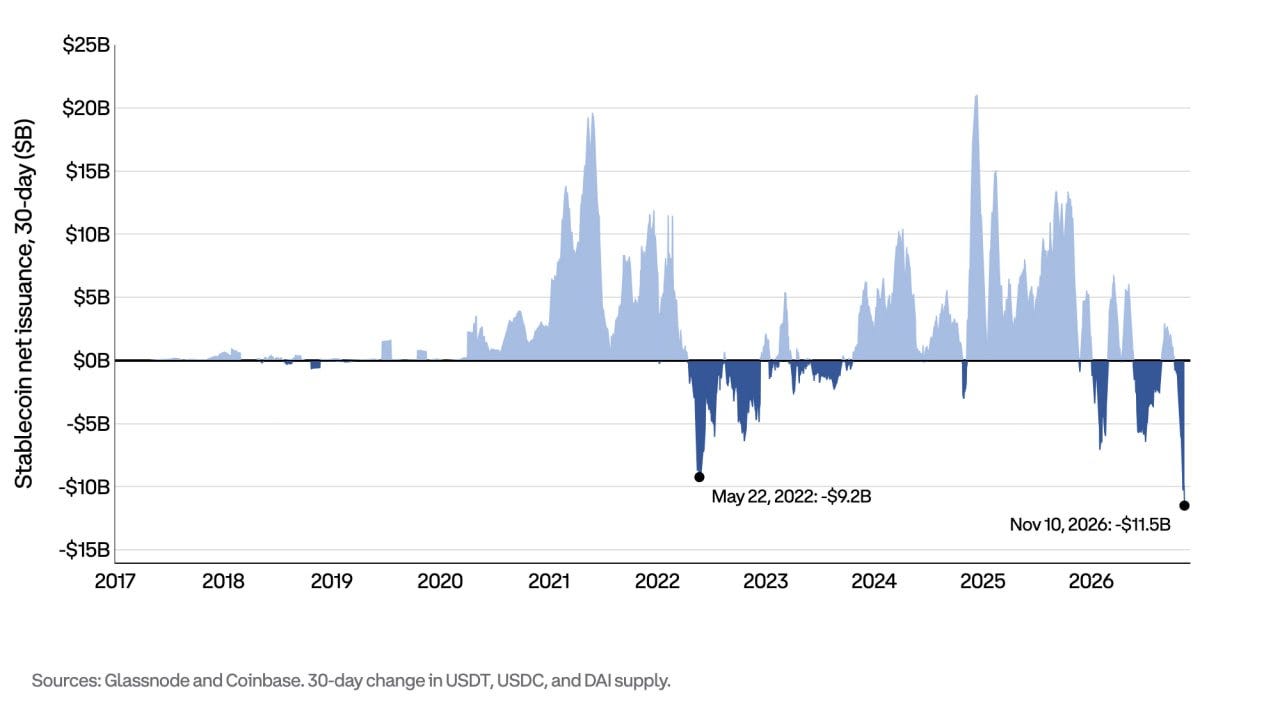
- Stablecoin liquidity is shrinking, with more liquidity leaving the market than during the Terra collapse in 2022. This stablecoin supply is a strong indicator of liquidity and suggests it is waiting to be allocated in the market; as more of this liquidity leaves, it is hard to see the market performing well in the near term. This departure cannot be attributed to the Binance hack, as liquidity had been leaving well before that.
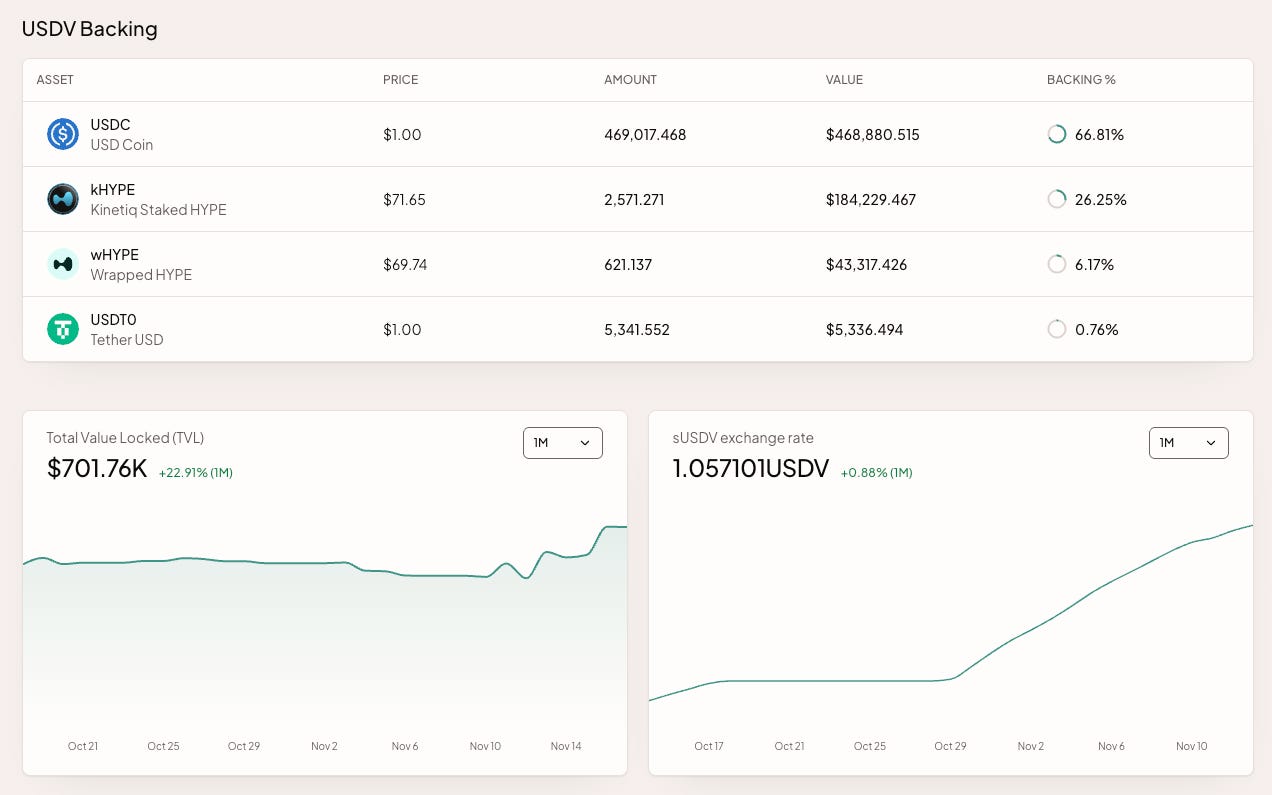
- Delpho launched USDV, a yield-bearing basis trade stablecoin on HyperEVM. It works similarly to Ethena, and you can deposit HYPE/kHYPE and stablecoins. If you hold HYPE, Delphi essentially helps maintain exposure to the asset while earning funding yield.
Originally published in the Castle Labs newsletter. Subscribe at research.castlelabs.io/subscribe.