The Rebirth of Onchain Options: An Ecosystem View
This article is an excerpt from our research on The Renaissance of Onchain Options, mapping the expansion of options (and prediction markets) as a trading instrument and the volatility that prices them, published in collaboration with Block Scholes.

Download the complete report here.
Options in Financial Markets
Most people don’t realise they’ve been trading options their whole lives.
If you’ve bought insurance, you’ve paid a premium for a conditional payout in the future. This is a put because you are protected against a drop in the value of whatever you insured. If you’ve taken out a mortgage, you hold the right to refinance early. This is a call because you hold the exclusive right (but not the obligation) to “call in” or cancel your current debt contract.
Options now dwarf futures in global exchange-traded derivatives volume, with options accounting for over 4x the contracts of futures in 2024, and in 2025, U.S.-listed options posted a sixth consecutive record year, with roughly 15.2B contracts traded, equating to ~$36B in premium traded daily.
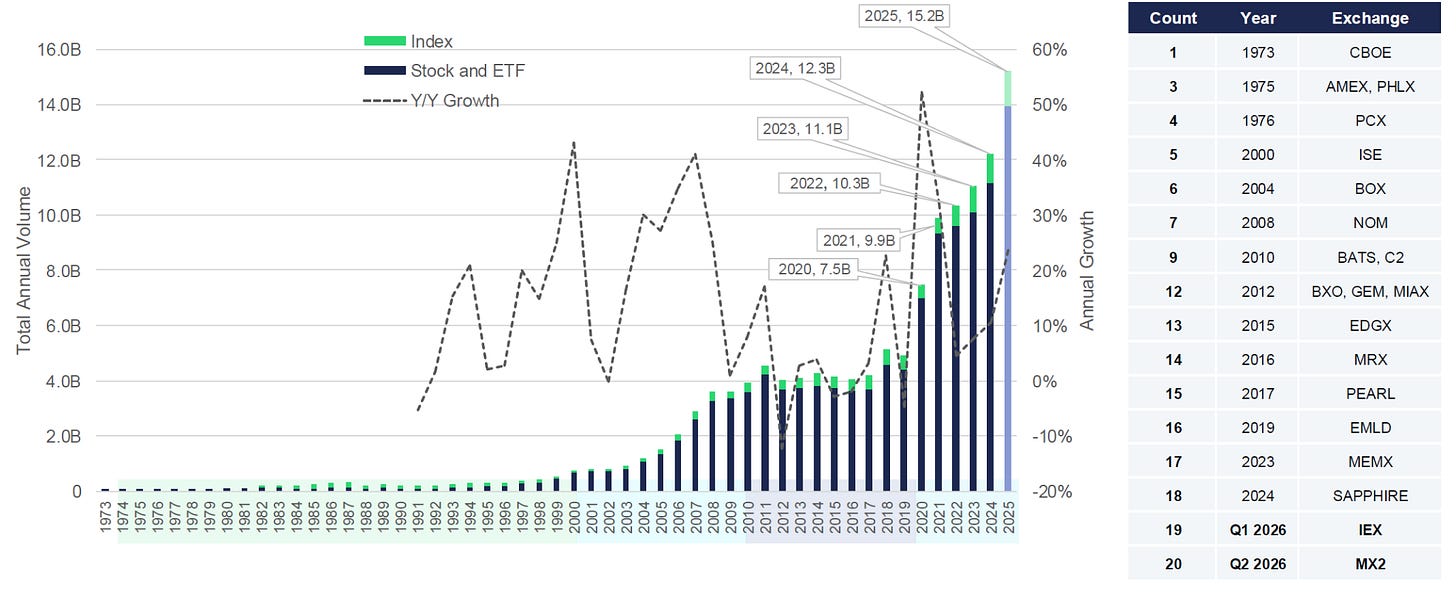
Figure 1 (CL) State of Options Industry
Zero-day-to-expiry (0DTE) options on SPX alone topped $1 trillion in daily notional at their peak, averaging 2.3 million contracts daily and comprising 59% of the product’s total volume in 2025. 0DTE options expire on the same day they are traded; they are used to chase large, rapid returns on intraday stock movements, but they carry the risk of losing 100% of your investment very quickly.
In 2024, the NSE (National Stock Exchange of India) accounted for ~84% of global equity options contracts; however, in value terms, the total premiums paid by options buyers in the US were still around 4 times those in India. This suggests that the Indian retail public is trading a massive number of tiny contracts, whereas US participants trade fewer, but vastly larger and more expensive contracts.
The appeal of options is making its way into crypto products, too, albeit from institutions.
CME, the largest US-regulated derivatives exchange, is now offering 24/7 crypto options. This is an unprecedented shift from a legacy exchange seeking to retain its user base, one that recognises the appeal of crypto markets that trade around the clock. Furthermore, in April, open interest in BlackRock’s IBIT options, which launched just over 2 years ago, surpassed BTC on Deribit, rising from $26.9 B to $27.6 B, despite Deribit launching over 10 years ago.
Options are extremely flexible instruments which can be leveraged in a wide range of applications:
Hedging: using options as an insurance policy against price exposure (buying puts to lock in a firm floor against downside losses, or calls to protect against missing out on a sudden upside rally)
Income: selling options to steady cash premiums from the market. These are great for non-directional users, who can generate passive yield on their existing assets (covered calls), or get paid upfront while waiting to buy the dip (cash-secured puts)
Speculation: expressing a view on price or volatility without buying the asset outright, whether on direction, timing, or specific price movements (this could be via a range of options strategies)
Custom strategies: combining multiple options into structured products, commonly used by banks and asset managers to create yield products or downside-protection notes
User profiles are spread widely across financial markets. They range from institutional market makers hedging risk and banks packaging yield, to volatility funds trading market swings and retail investors speculating on cheap, same-day 0DTE movements.
Early Onchain Attempts
Given their prominent role in traditional markets, options were expected to be an instrument with natural product market fit in volatile, onchain crypto markets. Instead, they have been one of its most repeated failures.
This was in no way due to a lack of experimentation, as can be seen from the products launched in previous cycles:
Opyn tokenised vanilla options on Ethereum in 2019, but thin liquidity, heavy collateral requirements, and high fees on mainnet held it back.
Hegic attempted the peer-to-pool model in 2020, simplifying the experience for buyers, but pooled LPs took on risk that was hard to hedge.
Ribbon, Friktion, and Dopex opened vaults in 2021, creating simple deposit-and-earn structured products for users seeking yield without having to manage positions, but volatility was sold into thin, cyclical demand, compressing yields until the premiums could no longer outweigh the risk.
Lyra, Premia, Pods, and Siren experimented with options AMMs, trying to provide continuous liquidity across strikes and expiries, but struggled with pricing and hedging, so LPs inherited complex volatility and inventory risk, while organic flow remained thin.
In 2022, Opyn launched Squeeth, a perpetual that tracked ETH squared exposure, giving users convexity without having to manage dated options. Launched on Ethereum at a time of high fees, the product was hard to explain and expensive to hold when funding was high.
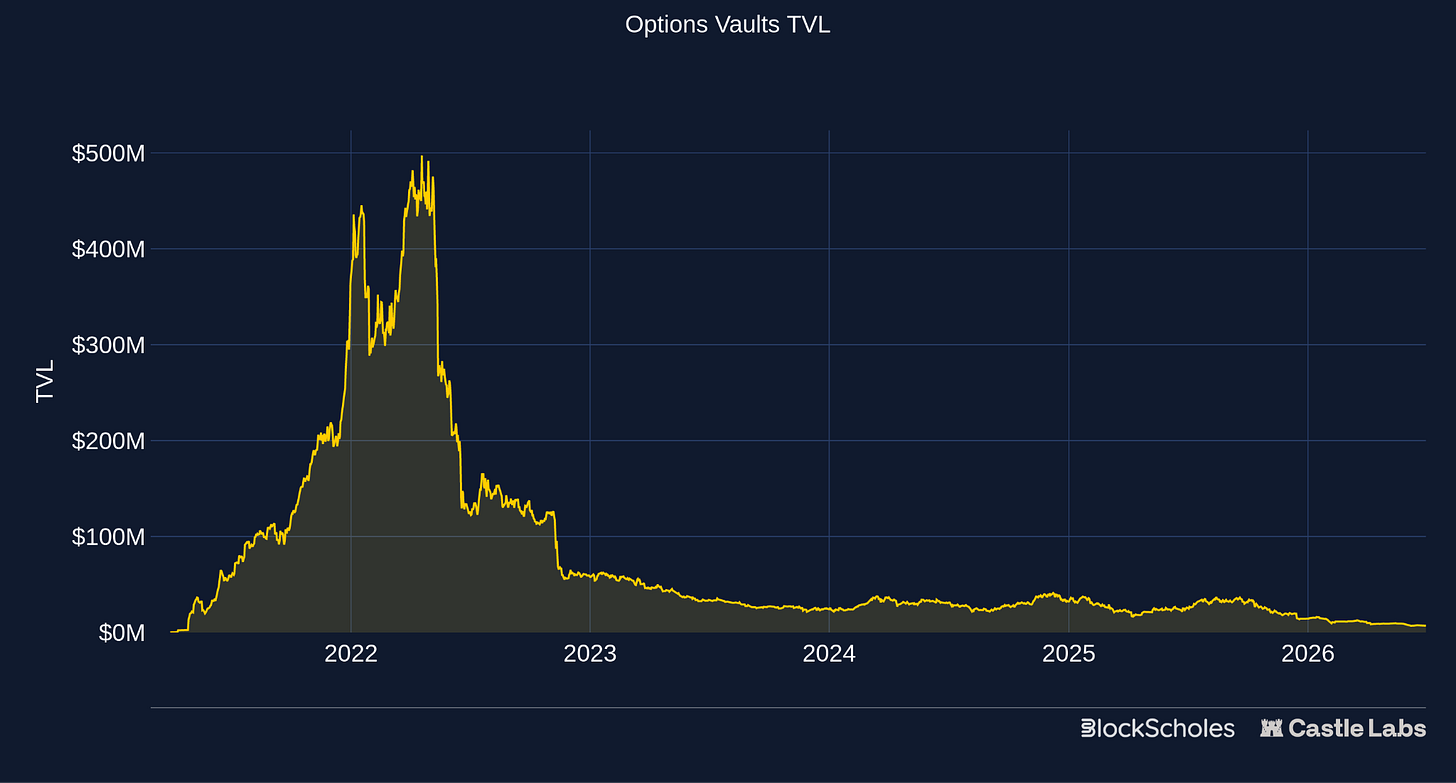
Figure 2 (CL) Options Vaults TVL - DefiLlama
The sector has been repeatedly held back, primarily by structural constraints. Weak market-maker participation left venues with thin two-sided liquidity and pushed hard-to-hedge risk onto passive LPs. Poor capital efficiency was paired with unreliable volatility surfaces, while the user experience was left in no man’s land: too complex for retail but lacking the professional architecture required by institutions.
New Infrastructure & Refinement
Since these early attempts, conditions have been continually improving:
Rollups and Ethereum scaling cut gas fees, making complex onchain actions affordable while improving execution and settlement.
CLOBs and RFQs began to replace AMM models, fostering a more natural environment for professional traders and market makers, enabling them to quote specific strikes and expiries, update their prices in real time, and control their risk more effectively.
Simplified products targeted narrower audiences as venues focused on shipping specific products for specific users.
Prediction markets made option-like payoffs accessible for mainstream retail, normalising conditional payoff trading through binary outcomes
Institutional demand for crypto options has been growing steadily, primarily through Deribit and, more recently, through IBIT and CME.
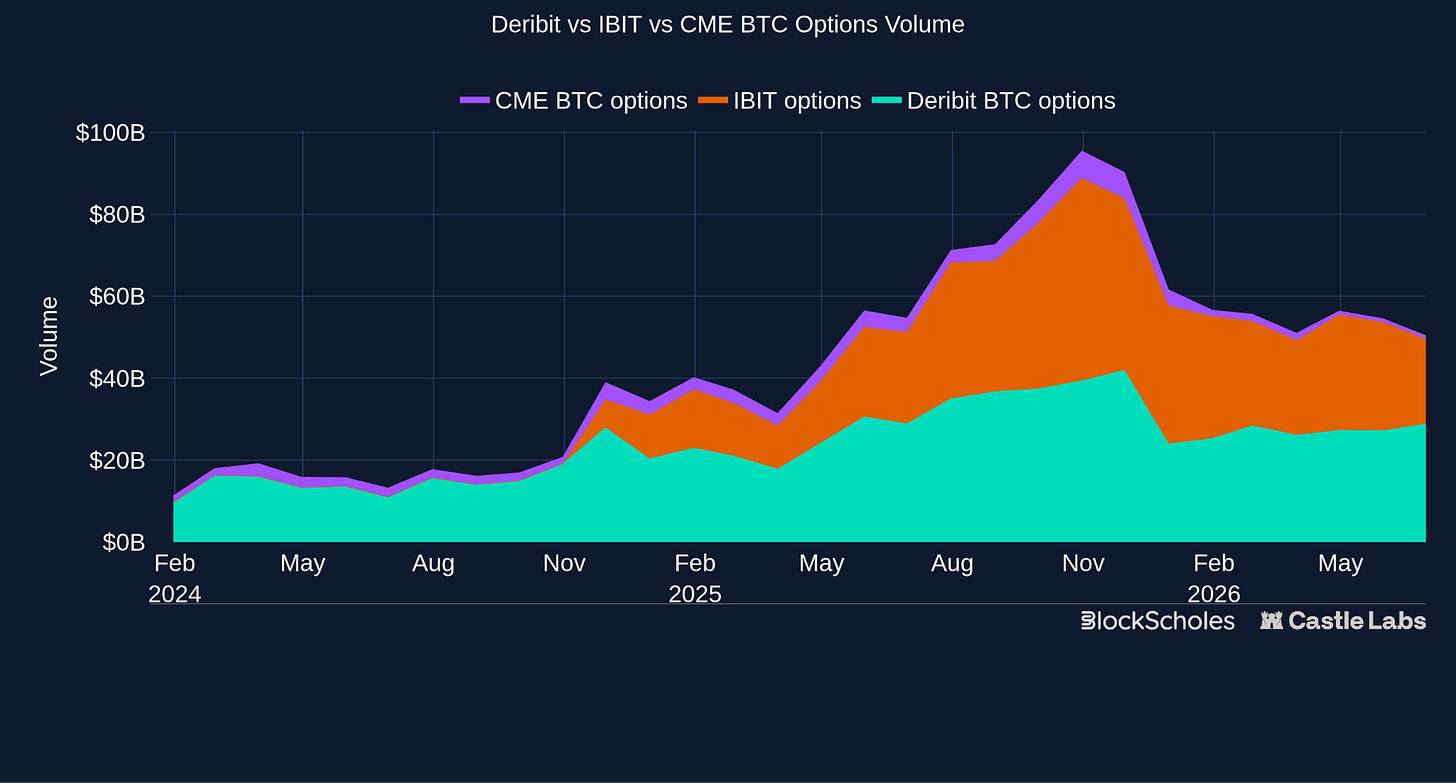
Figure 3 (CL) Deribit vs IBIT vs CME BTC Options
Conditions have also improved onchain, where stronger options markets are beginning to form, with 30d notional volume at ~$1.44B, and premium volumes posting all-time highs this year.
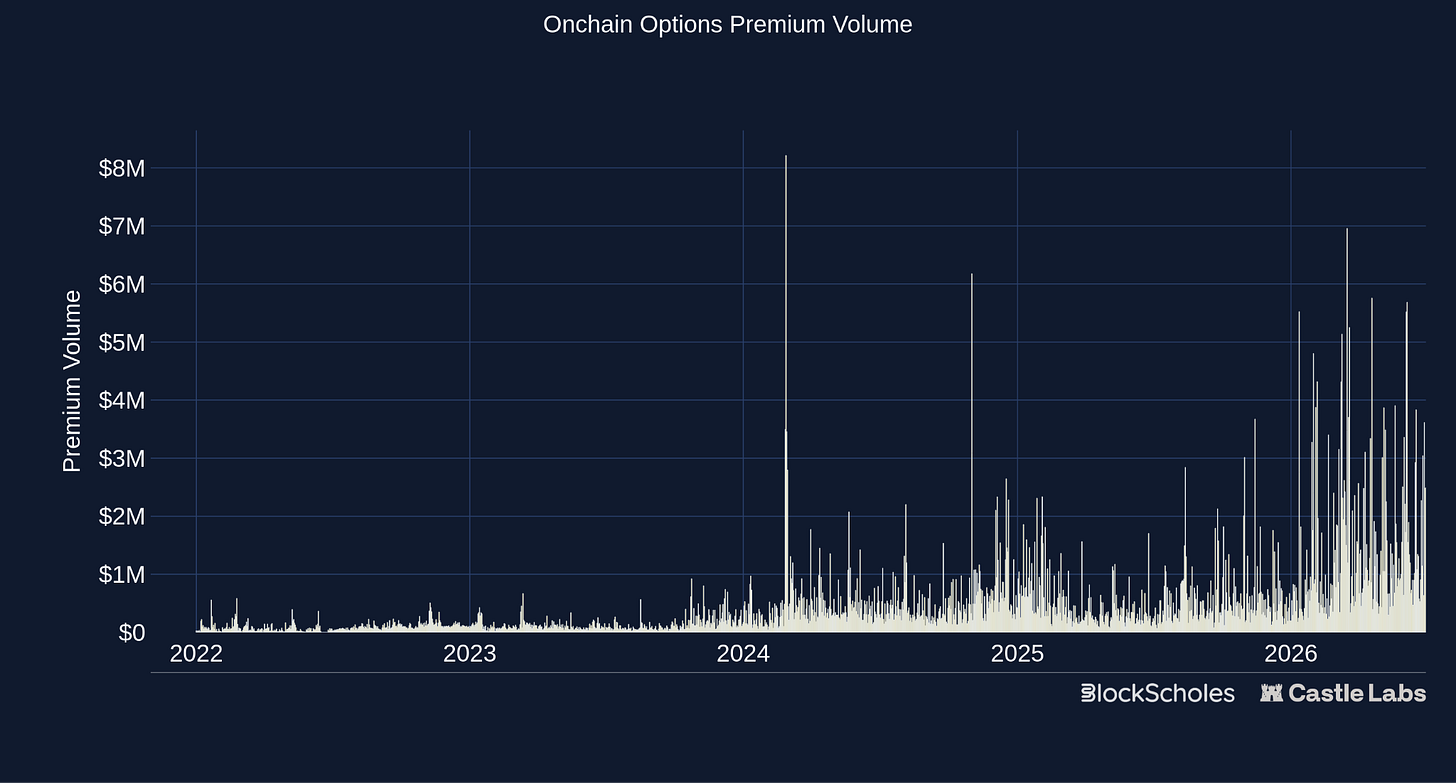
Figure 4 (CL) Options Premium Volume
The resultant category looks vastly different from the first DeFi options cycle. Protocols are no longer simply attempting to become Deribit onchain, and the ecosystem touches many parties from institutional venues and ETF wrappers to onchain vanilla options, new exotics, and binary options operational through prediction markets.
In the following sections, we will dive into the current options landscape, focusing on what’s happening onchain.
The Crypto Options Ecosystem
The crypto options landscape is a set of adjacent markets with different settlement and payoff types. The map below splits the ecosystem across these two dimensions:
Settlement: onchain to offchain
Payoff: vanilla to exotic
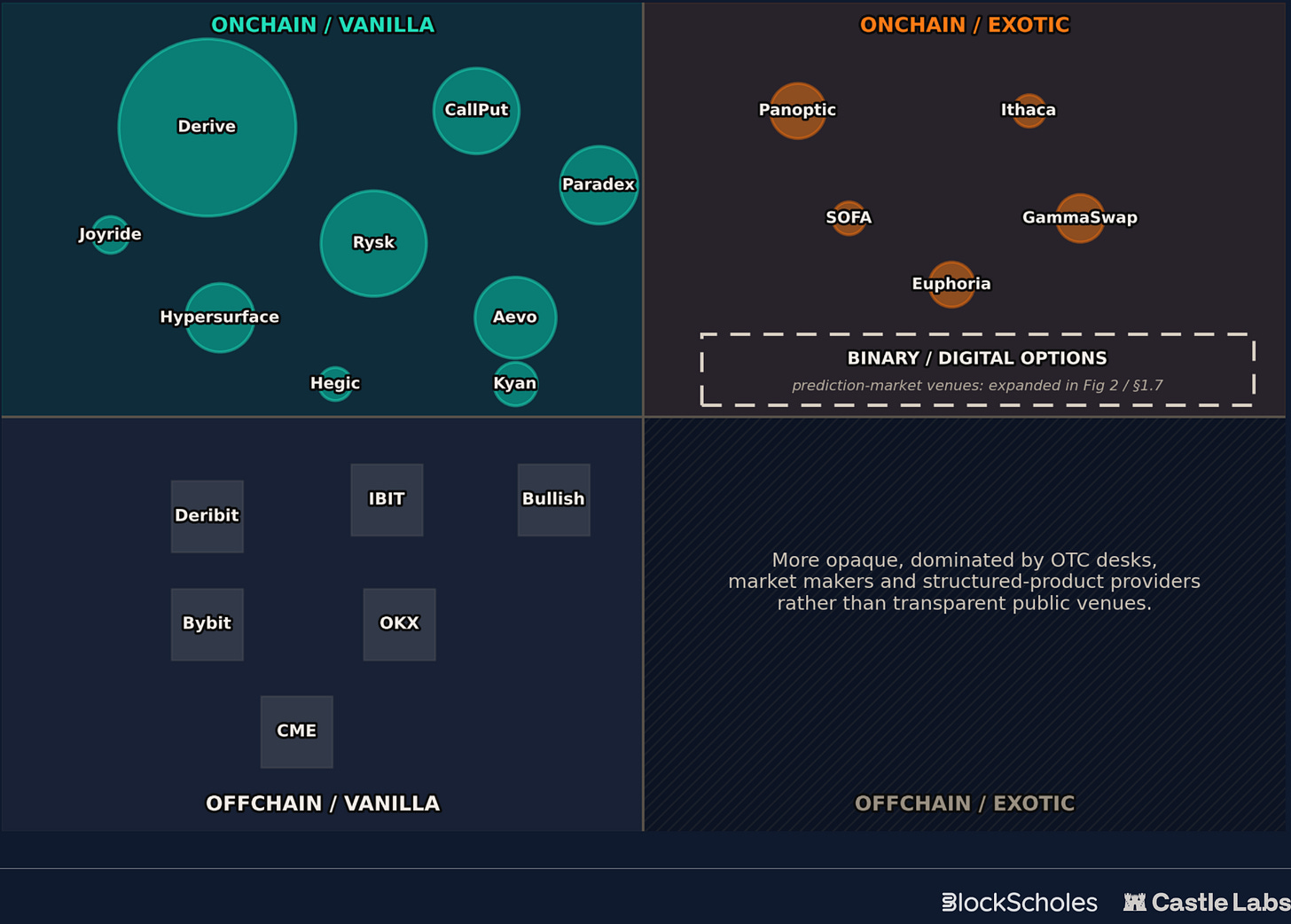
Figure 5 (CL) Options Ecosystem Comparison
Offchain vanilla options remain the clear leader, led by Deribit, IBIT, and CME, along with CEXs like Binance and OKX. Onchain vanilla venues are instead beginning to rebuild liquidity around CLOBs, RFQs, and more simplified user-focused products, whilst settling transactions onchain.
More experimental products sit within onchain exotics, using options or option-like payoffs as building blocks rather than simple listed calls, puts, and spreads. Examples include:
Perpetual options: replace fixed expiries with a streaming premium mechanism. These allow traders to hold volatility positions indefinitely without the friction and gas costs of manually rolling over contracts.
AMM-native options: create option-like exposure from AMM liquidity positions rather than listed calls and puts. These enable advanced yield farmers to hedge against impermanent loss and allow long-tail asset speculators to buy calls and puts on newer, unlisted tokens.
Short-dated touch options: provide an immediate, fixed payout the exact moment an asset touches or breaches a specific price target. This structure is heavily utilised by retail day-traders, scalpers, and event-driven news traders chasing rapid feedback loops during short bursts of extreme intraday momentum.
The fourth quadrant, offchain exotics, is more opaque, dominated by OTC desks, market makers, and structured-product providers rather than transparent public venues.
This report focuses on the onchain side of the map, covering vanilla options venues and exotic options primitives before turning to binary option-like markets, most commonly expressed through prediction markets.
Onchain Vanilla Options Venues
There has been clear progress in onchain vanilla options recently, not through changing the payoff itself, but through the surrounding infrastructure, product design, and user experience. These venues have generally moved away from passive LP pools toward CLOBs and RFQs, making room for portfolio-margin and yield-bearing collateral, as well as more targeted income products that simplify outcomes for users.
This section will walk through the most prominent venues as they stand today.
Derive
Derive is a clear example of this architectural shift. It evolved from Lyra, an options AMM, into the CLOB-based venue we see today. Today, Derive runs on its own OP Stack L2, offering cross-margined options and perps through a professional orderbook interface. Derive does not attempt to hide the complexity of options from users and therefore targets pro traders, market makers, institutional users, and other sophisticated volatility traders. It looks much like a traditional options exchange, with an array of assets, strikes, and expiries that can be combined to create custom payoff structures.
Using an off-chain matching engine for instant execution and an onchain L2 for settlement allows institutional allocators to trade at the speed of a centralised exchange (CEX) like Deribit while maintaining non-custodial ownership of their assets. Derive also offers a range of vault products that, unlike previous attempts, harness the underlying exchange to execute a predetermined options strategy, aiming to earn yield on deposits.
Derive accounts for the majority of onchain options activity currently, with $1.142B in 30-day notional and $44.3M in premium, representing 79.2% of notional and 87.2% of premium across the category. These numbers should be accompanied by the caveat that Derive uses market-maker rewards, OP incentives, DRV rewards, and rebate programmes to support liquidity.
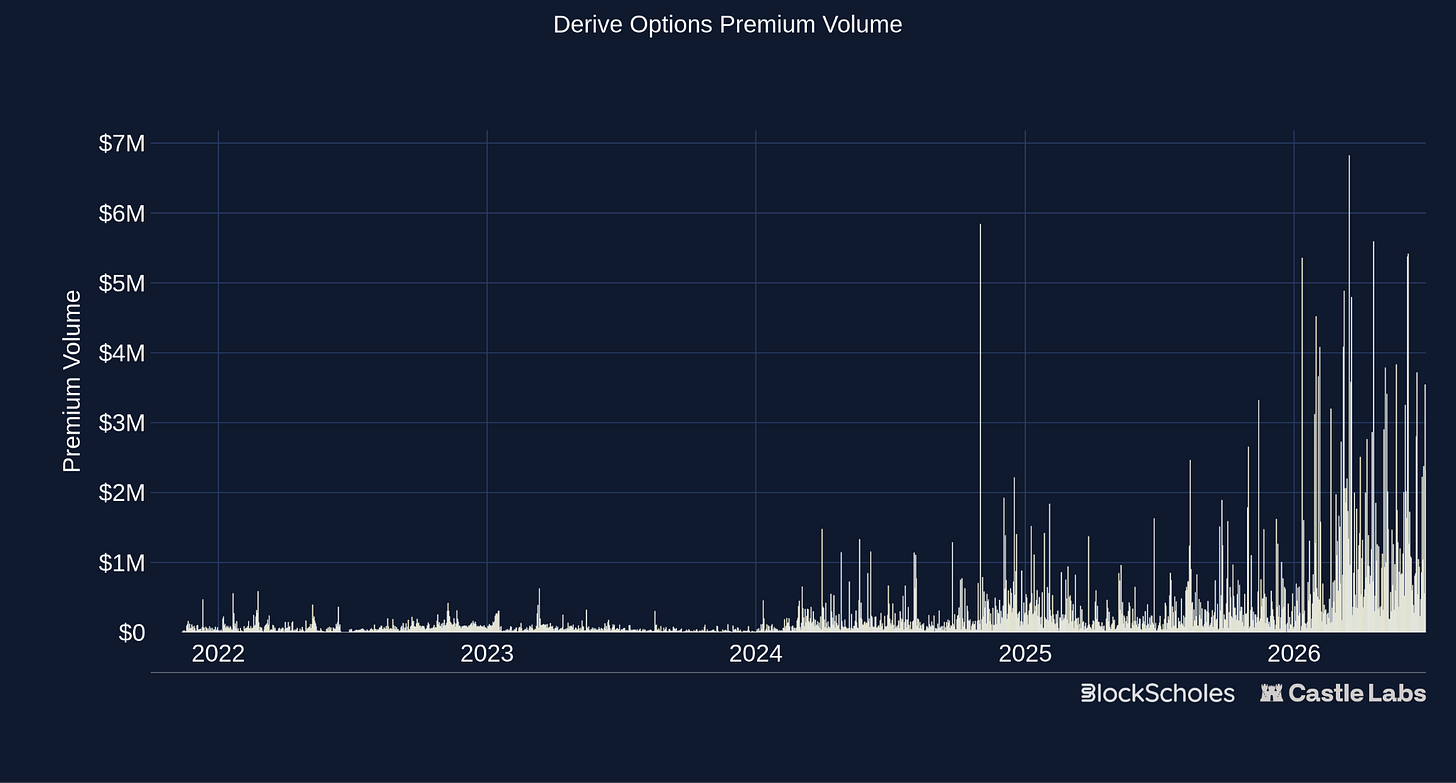
Figure 6 (CL) Derive Options Premium Volume
Despite the incentivisation of liquidity and participation, Derive highlights how the industry has developed over the years, with fully fledged options exchanges now running on performant appchains, accessible to institutions and market makers.
Rysk
Rysk takes a completely different approach than Derive. Built around covered calls and cash-secured puts, it uses options as upfront income products, whilst keeping strikes and expiries selectable, unlike option vaults of the past. It routes user demand through an RFQ system, where market makers quote on specific requests, purchase the options flow, and manage their own risk elsewhere. Rysk focuses on abstracting the complexity of option products, making them appealing to retail and institutional investors alike with strong asset selection, clearly defined outcomes, and a seamless user experience.
For users, the offering is simple. Earn yield on your assets while agreeing on a price level you are willing to sell at or buy at. This is reflected in a broad range of actual users. They all want to earn yield, but do so in different ways and with different strategies. Treasuries, DAOs and funds are long-term holders that already have a view on where they would be willing to buy or sell an asset, and if they didn’t want to, could still earn yield on much more distant strikes. Institutions, on the other hand, for example, Hyperion, a Nasdaq-listed HYPE treasury company, runs curated vault strategies on top of Rysk infrastructure. Its mandate is to accumulate HYPE, so a cash-secured put strategy is a natural fit, earning them yield while placing orders at lower levels.
Rysk generated $136.3M in notional and $1.94M in premium over the last 30 days, accounting for 9.5% of the category’s notional. Rysk’s monthly notional volume grew from $50M in January to $182M in May, remaining above $175M in March and April as well.
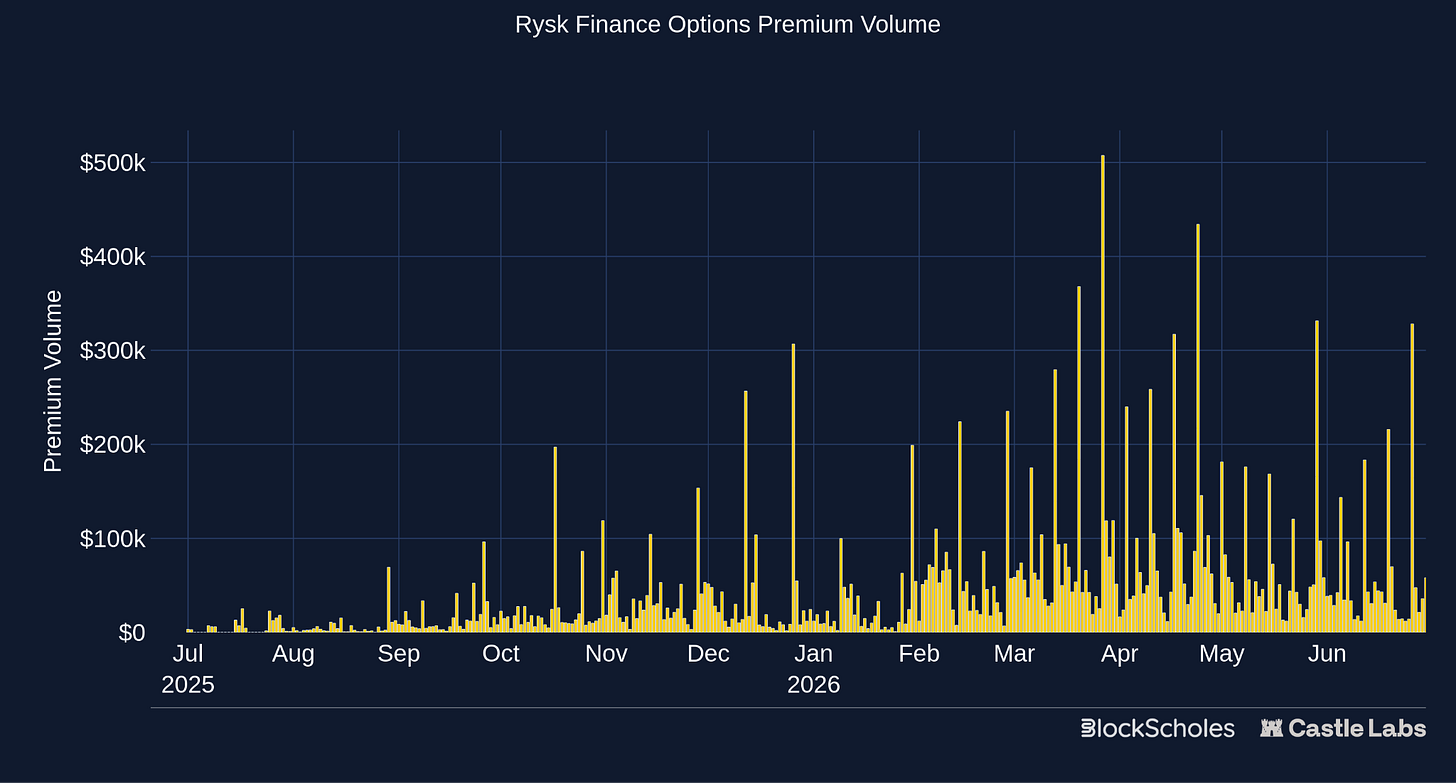
Figure 7 (CL) Rysk Finance Options Premium Volume
Unlike Derive, TVL for Rysk is much more relevant, as the product is based on collateralised option-selling strategies. To capture your premium, you need to deposit all your collateral, whereas in Derive, users can buy cheap options with a low premium to pursue large payouts.
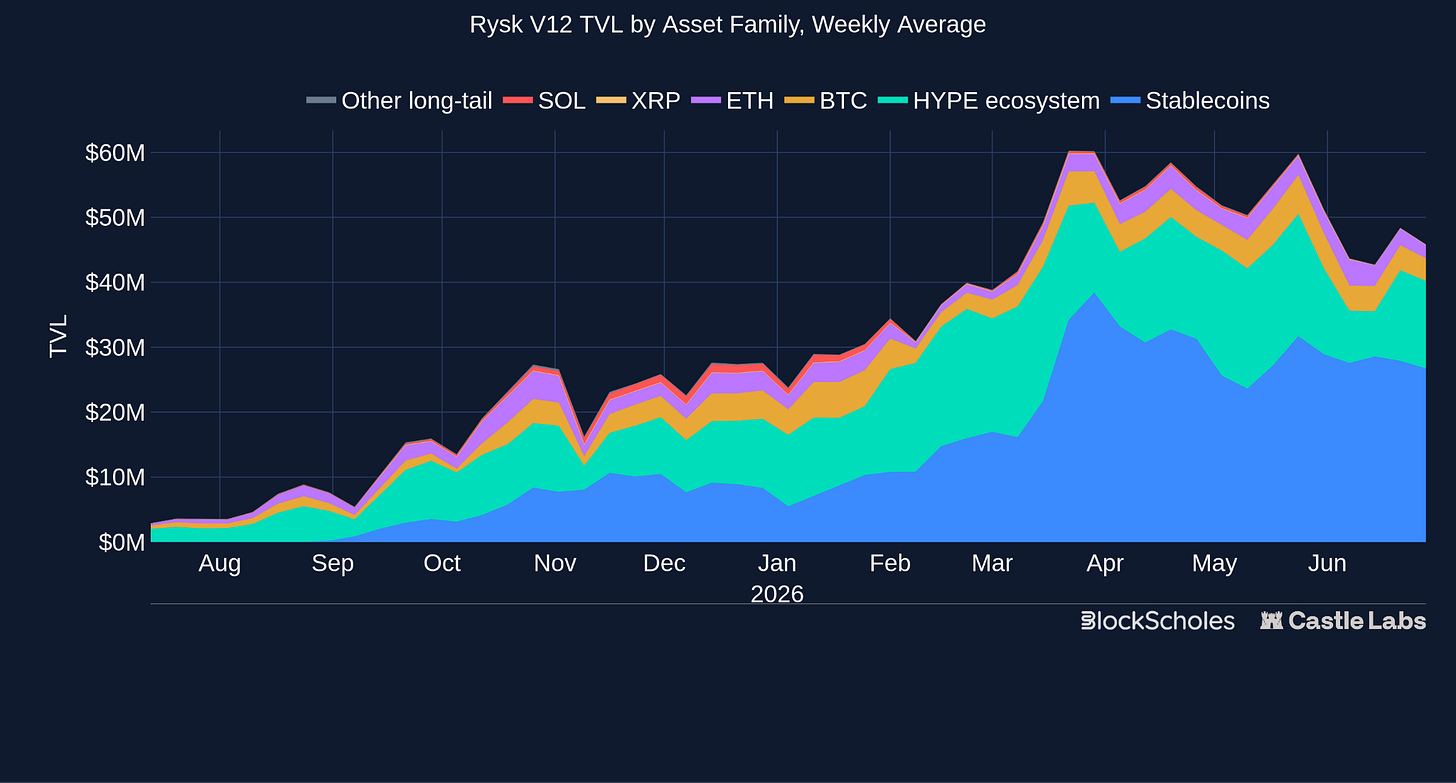
Figure 8 (CL) Rysk V12 TVL by Asset Family, Weekly Average
Rysk has managed to find a different kind of PMF in options, reframing them from trading instruments into income products based on selling volatility. With yields compressed across the industry, this has become highly competitive relative to lending, staking, and basis products, as evidenced by the strong, sustained growth since launch.
Aevo
Like Derive, Aevo evolved from an earlier options product into an orderbook exchange. It emerged from Ribbon Finance, one of the first major DeFi Options Vault (DOV) products, before shifting to a broader derivatives venue. Today, Aevo offers options alongside perps, pre-launch markets, OTC and automated strategies on a custom L2, with offchain order matching and onchain settlement. Orders are matched in microseconds via an off-chain Central Limit Order Book (CLOB) to replicate a CEX user experience, but user funds remain secure in onchain smart contracts hosted on a custom OP Stack Ethereum Layer-2 rollup.
Launched in 2023, Aevo saw its strongest options activity during 2024. Since then, reported TVL and visible options activity have fallen from earlier highs, although options premium volume has recently started to pick up again.
Aevo’s primary unique selling proposition is its variety of products inside a unified margin account. This includes pre-launch tokens, allowing users to trade highly leveraged options and perps on hyped, unreleased tokens before they hit spot markets.
Aevo generated $45.1M in notional and $2.52M in premium over the last 30 days, representing 3.1% of onchain options notional. Monthly notional rose from $20M in January to $50M in May, but live options OI is only around $3.6M, far below Derive and below Rysk’s calculated open-notional proxy.
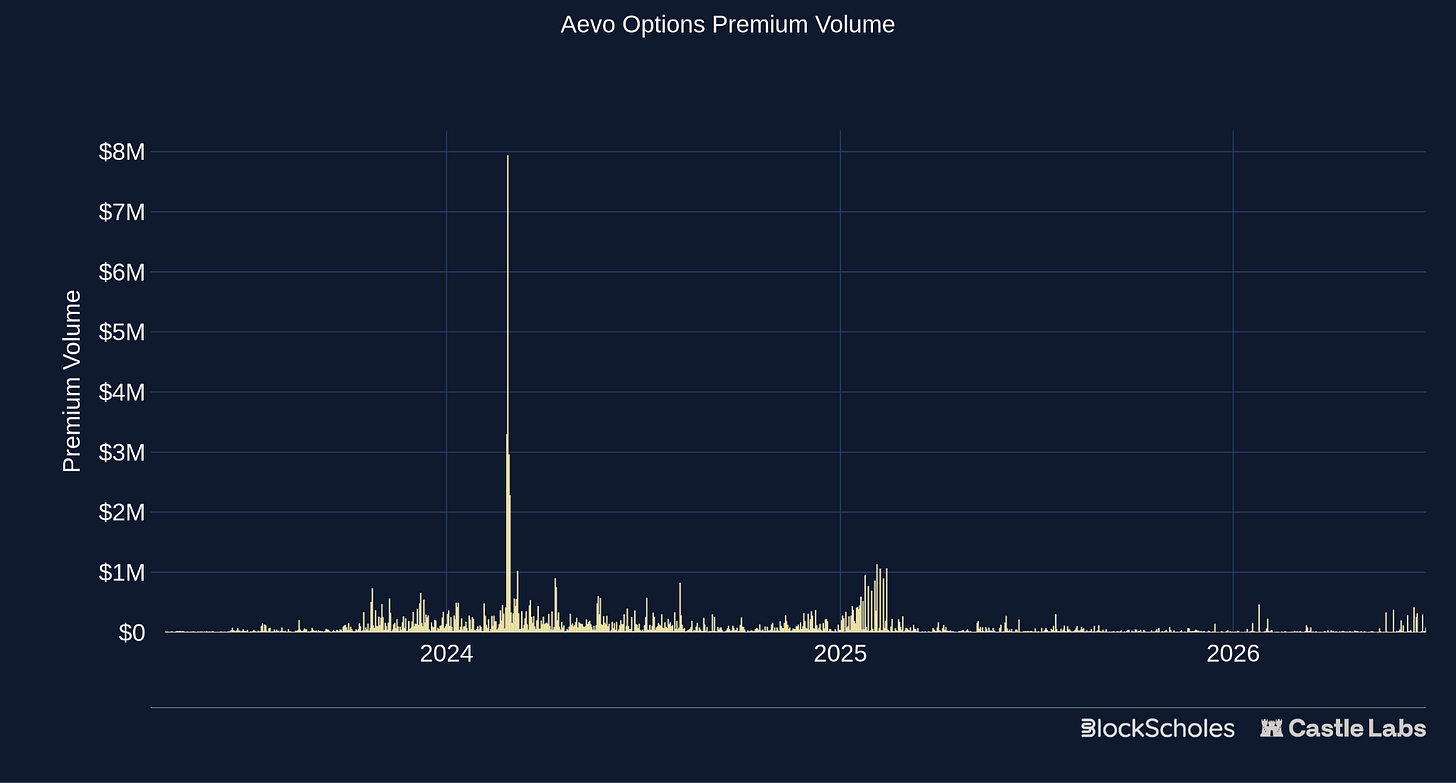
Figure 9 (CL) Aevo Options Premium Volume - DefiLlama
Incentives likely support some of this activity. Aevo distributes 1M AEVO per week through trading rewards, with 30% reserved for options, which may partly explain the recent uptick in options volume. Despite Ribbon being one of DeFi’s earliest options teams, focused on options vaults, Aevo’s migration to a broader derivatives exchange drew attention to perps, pre-launch markets, and trading campaigns. Options now look more like a secondary product with less focus, rather than the core business, and while the team are clearly trying to boost activity there, it remains to be seen whether these incentives can fully revive the options markets for Aevo.
Others
Beneath Derive, Rysk and Aevo, the rest of the market is smaller and fragmented.
Paradex is another broad derivatives venue, built by the Paradigm.co team, a provider of institutional crypto derivatives liquidity. Currently offering perps, options, and various Vault Traded Funds (VTFs), Paradex used to support perpetual options, but has recently paused this feature to focus on dated options, which opened in April of this year. To further encourage traders and gain market share, they have reintroduced zero-fee trading for makers and takers across perps, spot, and options.
Hypersurface looks more similar to Rysk, using covered calls and cash-secured puts to provide a yield product on HyperEVM. CallPut expands beyond crypto, differentiating from other platforms by offering a range of stocks, including SPCX, TSLA, NVDA, and COIN, in its vanilla call and put options exchange, which operates via request-based execution and protocol-managed liquidity.
Kyan has evolved from Premia into a wider derivatives exchange, using an orderbook-based model with support for RFQs. It offers portfolio margin and multi-leg combo trades to build more customised positions.
Ithaca offers a wide range of options, strategies, and structured products, and has recently integrated AI agents into its protocol for managing options strategies.
SOFA.org offers structured products, packaging option-like outcomes into products like Earn and Surge, rather than the user trading options directly.
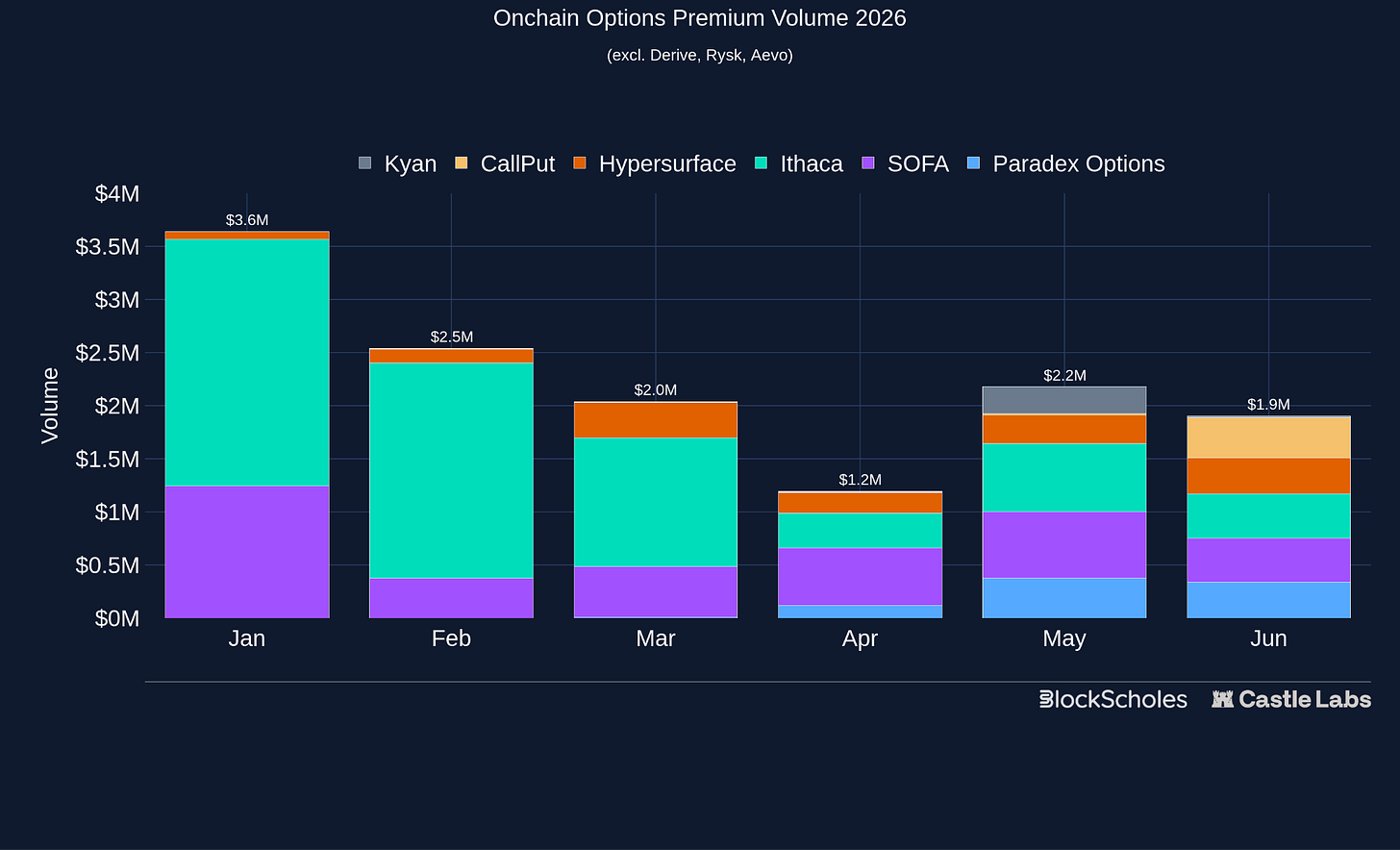
Figure 10 (CL) Options premium volume in 2026 excluding Derive, Rysk, and Aevo
The market is becoming more diverse at the lower end, with new entrants like Kyan, Paradex, and CallPut capturing share of premium volume in recent months.
Many protocols are now building better infrastructure, but infrastructure is not enough. Orderbooks, RFQs, cross-margin and portfolio margin do not create demand by themselves. Users still need a reason to choose options over perps for direction or prediction markets for events. The clearest demand appears when options are tied to a specific asset-holder problem, as with Rysk and HYPE: they offered newly wealthy HYPE holders yield, the ability to manage their entries and exits, and a way to monetise exposure without simply selling the asset. To achieve stronger growth, teams need to craft user-targeted products that perps and prediction markets cannot easily replicate.
Onchain Exotic & Short-dated Options Primitives
By exotic and short-dated options primitives, we mean option-like products that go beyond simple listed calls, puts, and spreads. These may remove fixed expiries, derive exposure from AMM liquidity, or settle based on whether the price reaches a specific zone within a short time window.
Vanilla onchain options are no doubt becoming more sophisticated and professional, but they still largely replicate familiar offchain products. Exotic and short-dated primitives, on the other hand, expand the design space and case studies, experimenting with payoffs that are harder to deliver through standard listed options: perpetual convexity, AMM-native exposure, and ultra-short-dated touch markets. Most of these ideas remain commercially unproven, often solving an interesting payoff-design problem before they solve a user-demand problem.
Perpetual options
Perpetual options remove the expiry variable from the equation. Instead of choosing a fixed expiry, traders hold a continuous convex exposure funded over time, much like a perpetual futures contract, but with greater upside potential. Squeeth is the historical example that gave users exposure to ETH², while Paradex has also tested perpetual options, though its current live options markets are dated only.
The problem, especially when compared to traditional perps, is that removing expiry does not remove complexity. Users still need to understand convexity, but now also need to manage the ongoing funding or premium cost and decide when holding the exposure no longer justifies the payoff. That weakens one of the core benefits of a standard option: knowing in advance the premium you will have to pay and the payoff. Perpetual options remain an interesting primitive, but have not yet made the product simpler or more widely adopted.
AMM-native options
Traditional options platforms fragment liquidity across strikes and expiries, where market makers need to update quotes after every price move. Despite improvements in faster, cheaper chains, this still remains a difficult task, especially on Ethereum mainnet, and often relies on offchain matching. Panoptic and GammaSwap instead create option-like exposure using AMM liquidity.
Panoptic uses Uniswap V3-style liquidity ranges to create perpetual options. Instead of paying a fixed upfront premium for a fixed expiry, buyers pay streaming premia over time, while liquidity ranges act as the basis for strikes and option exposure. This way, options can be created for long-tail assets already trading on AMMs without requiring a separate orderbook. Panoptic V2 just launched, offering perpetual options trading on ETH and SPCX. On the other side, depositors can enter either the Unicorn vault, which remains delta-neutral and scalps gamma, or the PLP Vault, which uses deposited ETH liquidity to earn Uniswap fees, Panoptic premia, and lending fees.
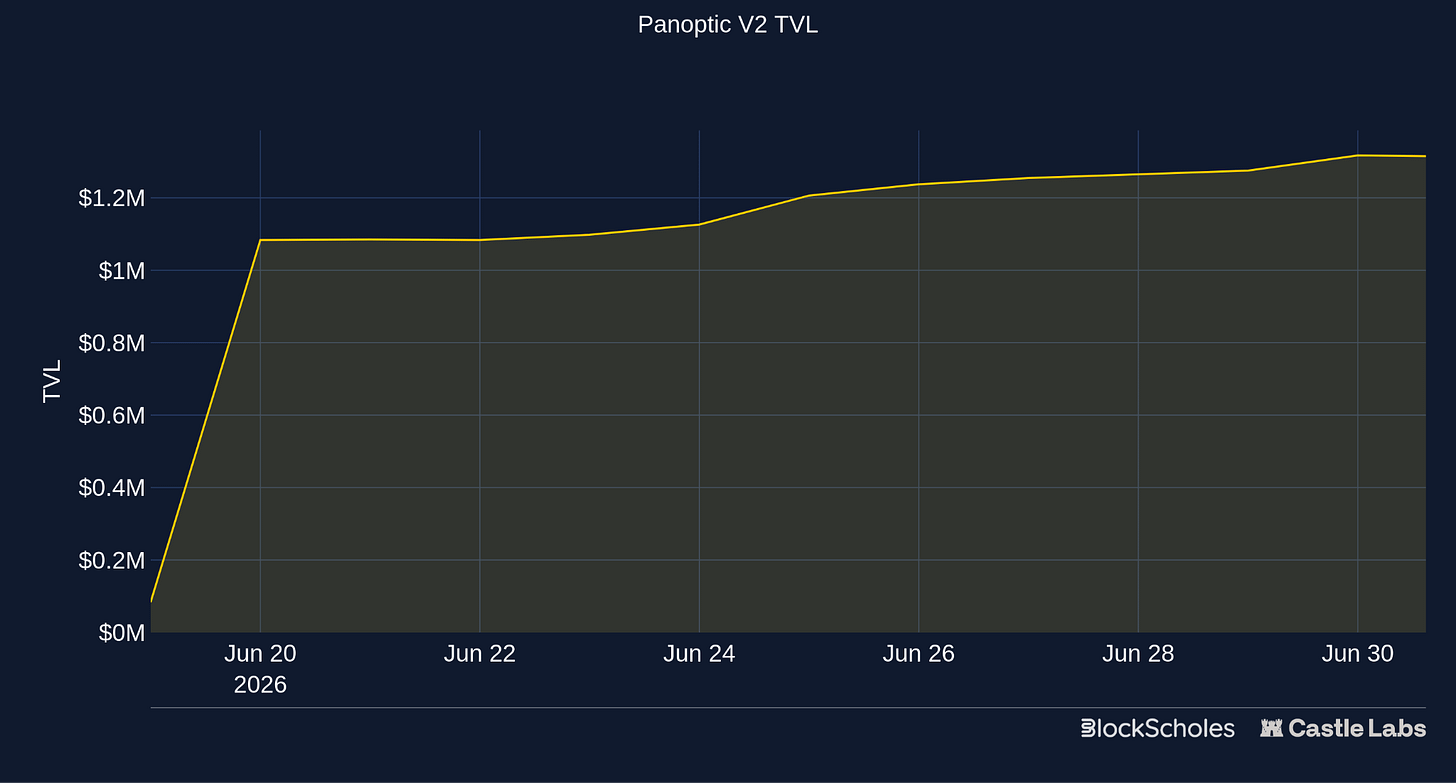
Figure 11 (CL) Panoptic V2 TVL
GammaSwap took a different angle with its V1, allowing users to borrow AMM liquidity and create perpetual option exposure. This made it possible to hedge impermanent loss or speculate on token volatility without an oracle.
These products are among the most complex DeFi-native designs in the category. Panoptic, for example, whilst it removes expiry fragmentation, also introduces streaming premia, liquidity widths and AMM range mechanics, meaning users of the product need to be comfortable with Uniswap V3 and the complexities of providing liquidity. GammaSwap, on the other hand, has now moved on entirely, looking to overcome its capital-efficiency and complexity issues by creating crypto-focused binary markets using an order book. This gives users a simple, convex trade without the risk of liquidation. In these markets, users are either right and they win, or wrong and they lose.
Short-dated ‘touch’ options
This bucket is probably the furthest from standard calls and puts. Instead of buying upside or downside exposure at a fixed strike and expiry, the user chooses a simple condition over a short window: will the price enter this zone, finish above this level, or resolve in-the-money within the next few minutes?
Euphoria’s Tap Trading is the newest onchain example of this design. Users select a grid square representing a price range over a five-second window. The payout is quoted up front by professional market makers and varies with the distance from spot, the time to maturity, and volatility. If price enters the selected zone before expiry, the trade wins. If it does not, the trade expires worthless.
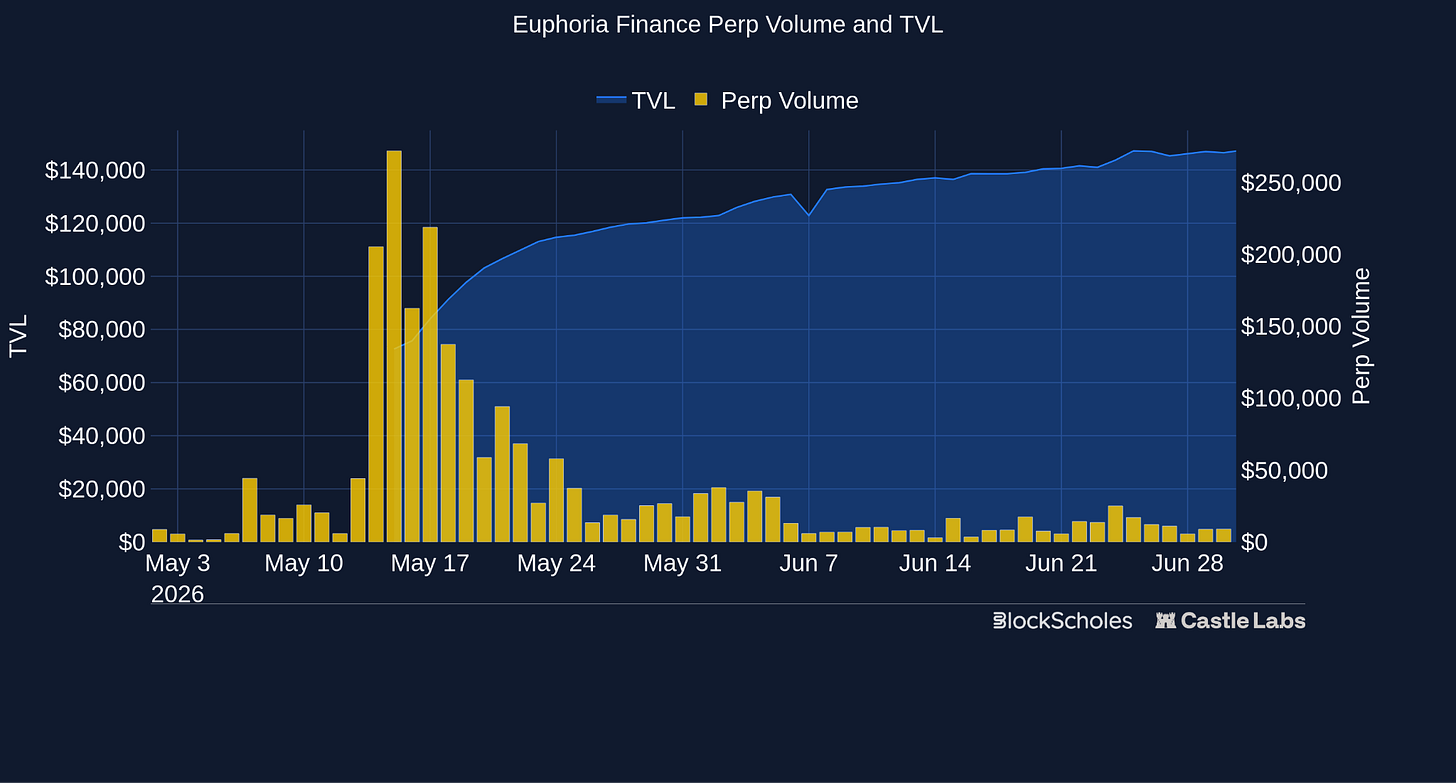
Figure 12 (CL) Euphoria Finance Perp Volume and TVL
This product moves in a similar direction to GammaSwap V2’s binary markets. The target user wants to bet on crypto prices over increasingly short timeframes, so the product competes less with traditional options exchanges and more with perps, prediction markets, and mobile betting. The appeal is simplicity: users can understand the trade quickly and access convex exposure without managing funding rates, liquidations, greeks or theta decay.
Why Options and Prediction Markets are the Same Instrument
The emerging popularity of prediction markets among retail participants is the first real example of non-linear payoff products gaining significant onchain traction.
But little known to the users trading them, prediction markets on financial assets, such as BTC Up/Down markets, are structurally identical to binary options, a well-known and well-studied instrument in Traditional Finance. Each contract pays out a fixed amount if a condition is met at expiry, and $0 otherwise.
This article is an excerpt from our research on The Renaissance of Onchain Options, mapping the expansion of options (and prediction markets) as a trading instrument and the volatility that prices them, published in collaboration with Block Scholes.
A follow-up piece will examine the prediction market ecosystem, analysing the top providers for binary outcomes (Kalshi, Polymarket, and Hyperliquid) based on the volume and spread of the BTC 1-day expiry markets they list.
Download the complete report here.
Originally published in the Castle Labs newsletter. Subscribe at research.castlelabs.io/subscribe.